If voices seem to linger after someone stops speaking, the room may have too little sound absorption. Hard walls, glass, floors and ceilings reflect sound back into the space. Adding suitable absorbent surfaces can make conversation clearer and the room more comfortable to use.
Table of contents
Echo and reverberation: what are you hearing?
An echo is a distinct reflection that you can hear separately from the original sound. Reverberation is the combined sound of many reflections decaying after the source stops. In everyday speech, both can make a room seem “echoey”, but they are not exactly the same phenomenon.
Room dimensions, surface materials and furnishings all influence the result. Clapping your hands can reveal a noticeable ringing sound, but it is not a substitute for an acoustic measurement where a project has a defined performance target.
Start with the surfaces you already have
Rugs, curtains and upholstered furniture can introduce absorption into an otherwise hard interior. Their effect depends on material, thickness and the area they cover. A small rug should not be expected to compensate for extensive glass and a bare ceiling.
Consider the room as a whole. A minimally furnished space may need several complementary changes. Adding irregular furniture or decoration can scatter some reflections, but scattering is different from absorbing sound; decorative objects are not a replacement for tested absorbent material.
Use acoustic panels where treatment is needed
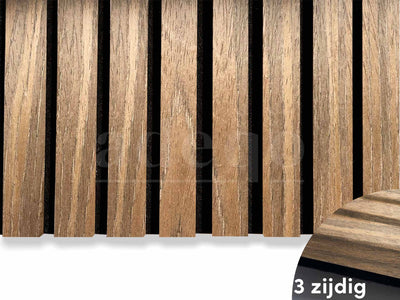
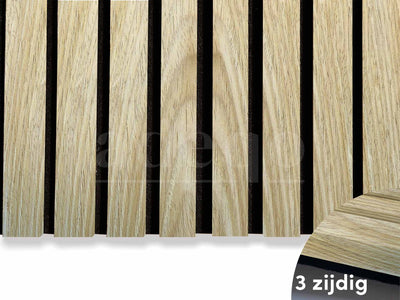
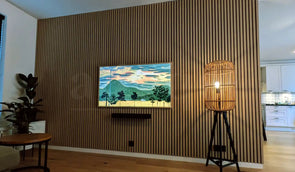
Acoustic wall panels add absorption while becoming part of the interior finish. Felt-backed wood slat panels allow sound to reach the absorbent backing through the gaps between the slats. The complete panel construction, mounting method and amount of treatment determine the acoustic result.
Adeqo panels combine recycled PET felt with MDF slats finished in real wood veneer on three sides. Choose a finish that works with the furniture and lighting, and plan the placement around the way people use the room.
What about high ceilings and small rooms?
In a room with high ceilings, overhead treatment may be useful when wall space is limited. It needs an appropriate fixing design and coordination with lights, ventilation and other ceiling fittings. A small room can also sound harsh if most of its surfaces are hard; room size alone does not tell you how much treatment is needed.
There is no single panel count that works for every room. Start with dimensions, photographs and the existing furnishings. Meeting rooms, classrooms and other spaces with acoustic requirements may need a specialist assessment.
Reducing echo is different from blocking noise
If the main problem is traffic or a neighbour heard through a wall, adding absorption inside your room does not replace sound insulation. That problem involves the building construction and sound transmission paths. Identify whether you want better sound within the room, less noise entering it, or both.
Plan a calmer-sounding interior
Compare acoustic wall panels or send Adeqo your room dimensions and photographs for help with finishes and quantities. For an overhead installation, read our ceiling panel guide. Practical planning helps you choose treatment for the room rather than adding a feature and hoping it solves every sound problem.