Living room acoustic panels

Give your living room warmth and character with acoustic wall panels. Compare walnut and oak finishes, including black oak, and choose a feature that works with your furniture, flooring and light.

Living room acoustic panels
32 of 32 products
Thomas

Need advice?

Our specialists can help you choose products and calculate quantities.

Message us on WhatsApp

wandpanelen in een sfeervolle woonkamer met verbeterde akoestiek

A natural finish with acoustic benefits

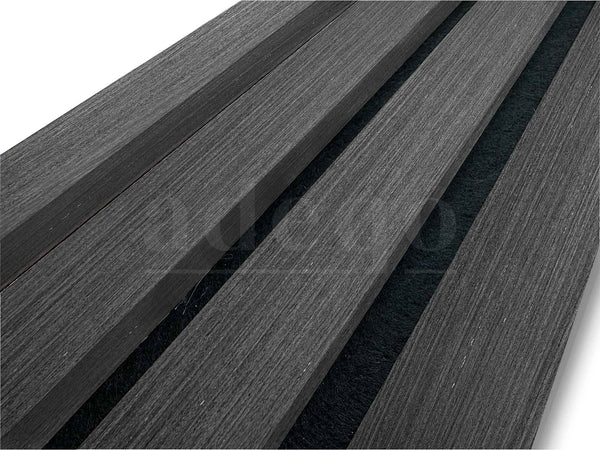
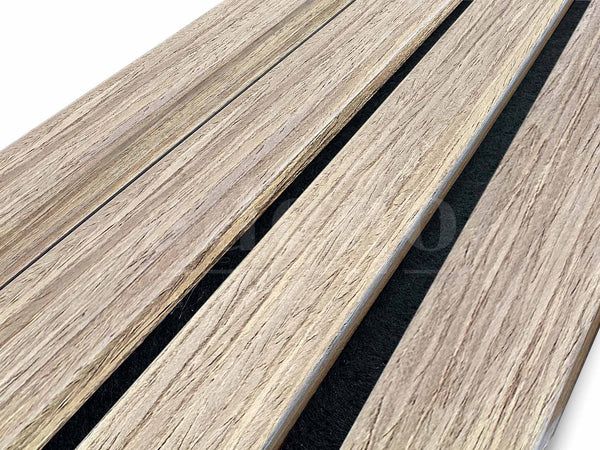
The felt backing helps absorb reflections inside the living room. Install panels on a suitable flat, clean and sound wall, then finish the edges neatly. Coverage and mounting affect the acoustic result.

Wood slat walls for a comfortable living room

A living room with glass, plaster and hard flooring can sound hollow. Acoustic panels introduce an absorbent surface while giving the room warmth and depth. Use them behind a sofa, across the TV wall or as a smaller feature within an open-plan space.

Find the right balance of colour and coverage

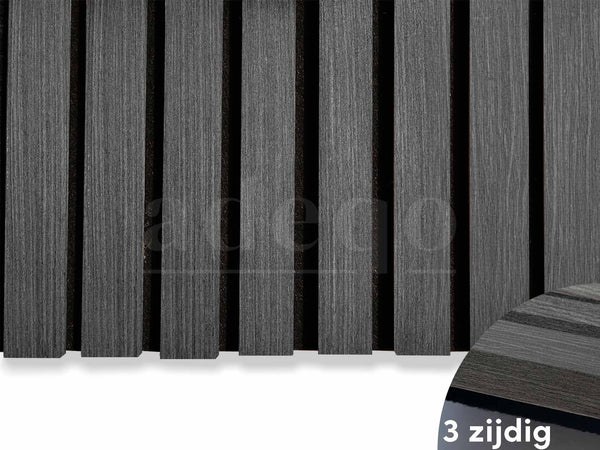
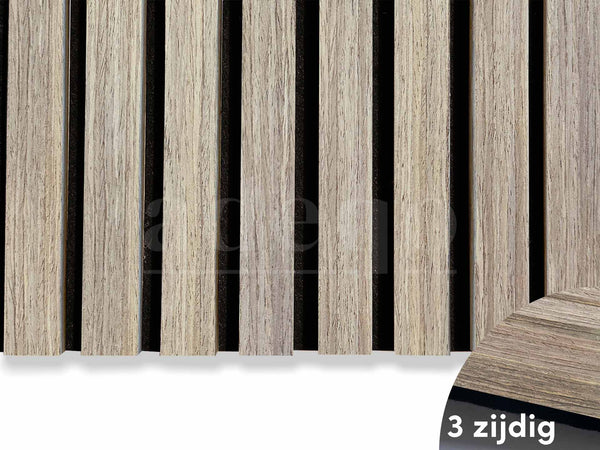
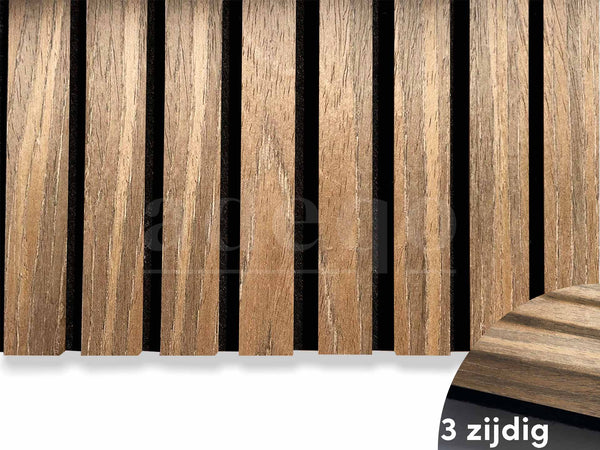
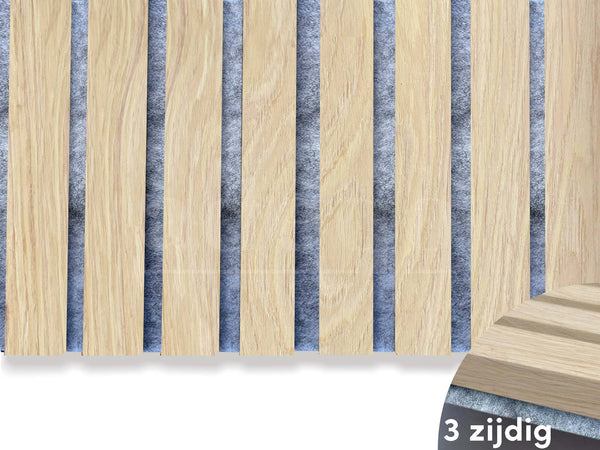
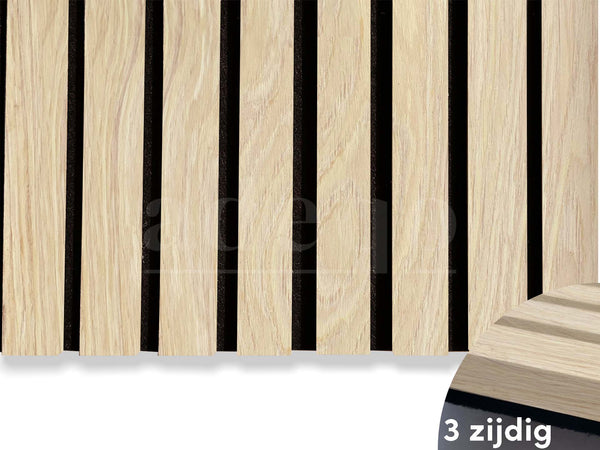
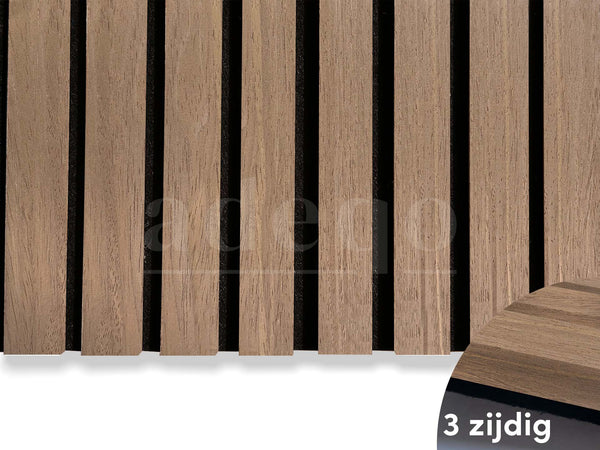
Light oak finishes pair with pale walls and natural fabrics. Walnut adds warmth; black oak gives a stronger contrast. Compare samples in daylight and under your usual lighting. You do not need to cover every wall: placement and coverage should suit the room rather than a fixed decorative rule.

Real materials, finished from every angle

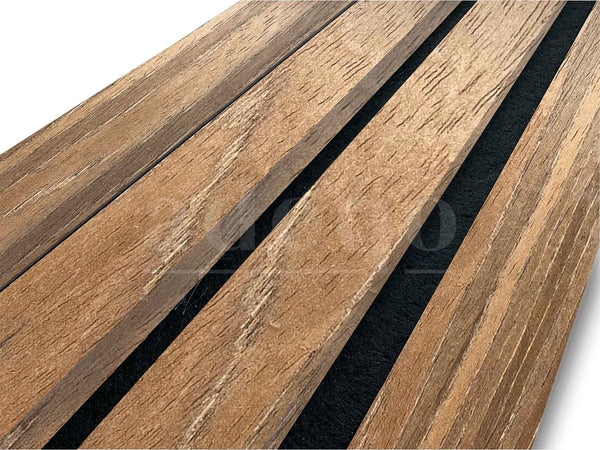
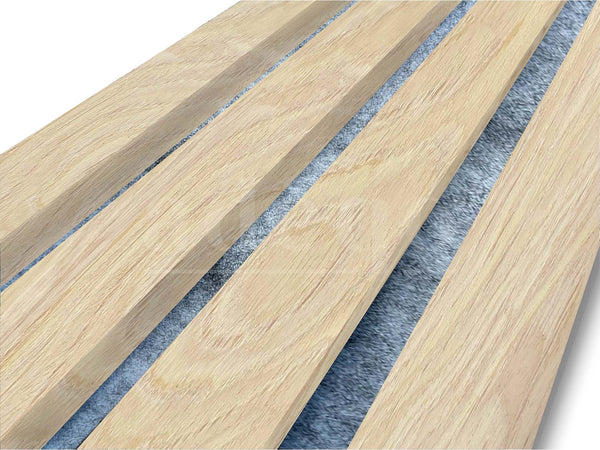
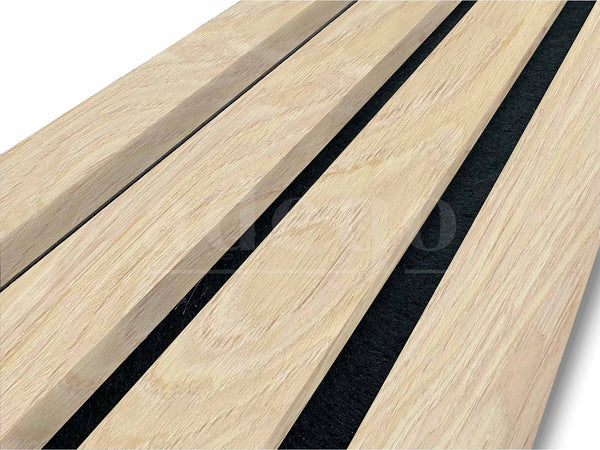
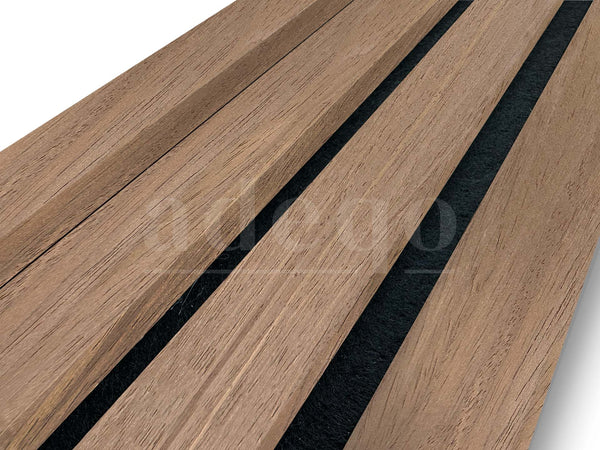
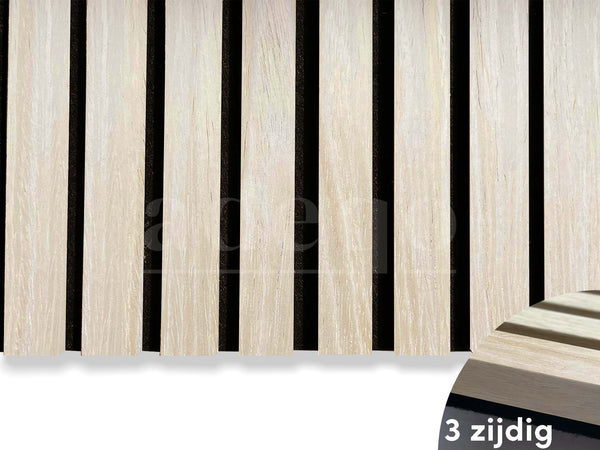
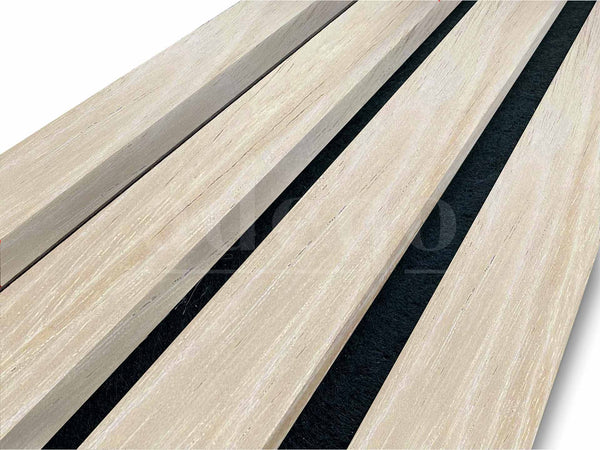
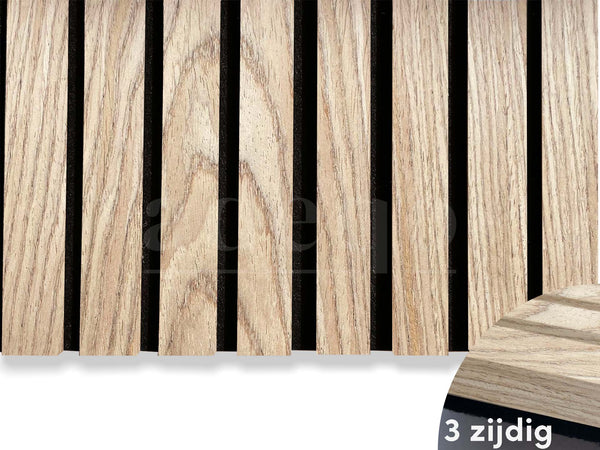
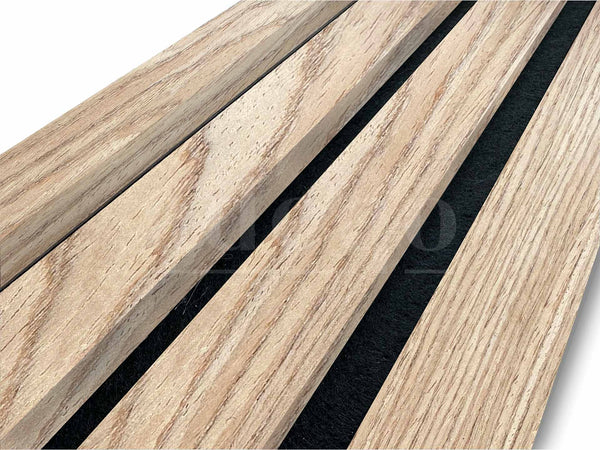
Adeqo Akupanels use MDF slats with real wood veneer on the front and both sides, over a 9 mm recycled PET felt backing. Standard panels are 60 cm wide, with 260 or 300 cm lengths. Matching end trims complete partial walls.

Plan a practical installation

Measure around sockets, skirting boards and adjoining furniture. Mount heavy furniture to the underlying wall, not the felt. Keep panels away from direct heat and follow appliance clearances near fireplaces. Acoustic absorption reduces reflected sound in the room; it is not insulation against neighbours.

Need help choosing? Order samples or contact our team with a photograph and your wall dimensions.

Frequently asked questions

For a full-height wall, divide its width by the panel width and round up. Standard panels are 60 cm wide; a 3 m-wide wall needs five full-width panels if the selected length covers its height. Draw the cut layout and allow for waste. For acoustic treatment, coverage depends on the room and mounting; 30–40% of wall area is an initial guide, not a guaranteed result.

See the current prices for your selected finish, dimensions and quantity on the product page. Add trims, fixings and delivery to compare the complete project cost. Approved business accounts have their own prices and quantity discounts. Request a quotation for a larger project.

Sound reaches the porous felt through the gaps between the slats. The backing absorbs part of the reflected sound and helps reduce reverberation. Class A absorption and NRC 0.90 apply to the tested installation configuration; results in a room depend on coverage and mounting. Panels do not replace sound insulation against noise through walls.

Sound reaches the porous felt through the gaps between the slats. The backing absorbs part of the reflected sound and helps reduce reverberation. Class A absorption and NRC 0.90 apply to the tested installation configuration; results in a room depend on coverage and mounting. Panels do not replace sound insulation against noise through walls.

Adeqo Akupanels have an MDF slat core with real wood veneer on the front and both sides, over recycled PET felt. They are not solid-wood boards and the visible finish is not a printed wood effect. Check the exact product specification for finishes such as WoodSkin.

Sound reaches the porous felt through the gaps between the slats. The backing absorbs part of the reflected sound and helps reduce reverberation. Class A absorption and NRC 0.90 apply to the tested installation configuration; results in a room depend on coverage and mounting. Panels do not replace sound insulation against noise through walls.

Sound reaches the porous felt through the gaps between the slats. The backing absorbs part of the reflected sound and helps reduce reverberation. Class A absorption and NRC 0.90 apply to the tested installation configuration; results in a room depend on coverage and mounting. Panels do not replace sound insulation against noise through walls.