A church may host spoken services, choirs, organ music and community events in the same room. Those uses can call for different acoustic qualities. The aim is not simply to remove as much reverberation as possible, but to support the building’s activities while respecting its character.
Table of contents
List the uses that the design must support
Identify spoken services, music, amplified events and any smaller meeting areas. Note where speech is hard to follow or reflections interfere with particular activities. A target for an ordinary meeting room should not automatically be applied to a church used for music. An acoustic specialist can assess the balance needed for the programme.
Assess the room and sound system together
Room volume, surface finishes, occupancy and seating influence the acoustic result. Loudspeaker positioning and settings also matter. Absorption may help with reflections, but it cannot correct every sound-system problem. Use a measured assessment where the project has defined speech or music performance requirements.
Respect the building and approvals
In a protected or historic church, agree any fixing and alteration with the responsible authority or building team. Avoid concealing important features or damaging original fabric. Reversible installation is an objective to design for, not a guarantee that any screw-fixed panel leaves the building unchanged.
Compare suitable treatment locations
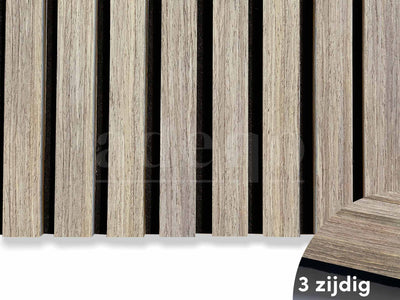
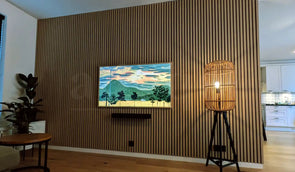
Wall panels, ceiling elements and other acoustic systems use different surfaces. Check sightlines, lighting, ventilation, access and supporting structure. A wood veneer finish may be appropriate for a selected wall when the design and exposure suit it. Overhead installations need suitable mechanical support, and all options should be compared using their test and mounting documentation.
Prepare a project schedule rather than a fixed coverage percentage
Specify the locations, dimensions, finish samples, fixings and performance evidence for review. Check applicable fire requirements for the exact supplied assembly; component reports are not complete-panel proof. Coordinate the work with services and events. Adeqo can help compare veneer finishes and quantities within an approved acoustic design.
| Church use | Question for the design | What to coordinate |
|---|---|---|
| Spoken service | Can speech be followed? | Room / amplification / acoustic target |
| Choir and organ | Which musical qualities matter? | Treatment amount and positioning |
| Community events | How does the layout change? | Seating / occupancy / sound sources |
| Historic interior | What alteration is approved? | Fabric / fixing / heritage process |
Plan your project with Adeqo
Compare acoustic wall panels and send us your dimensions, photographs and project requirements for help with finishes and material quantities. For commercial orders, view business customer options. Read our guide to fire classification and report scope for related planning details.
Frequently asked questions
How long does installing panels in a church take?
The duration depends on area, height, access, substrate preparation and the agreed fixing detail. Ask the installer for a schedule coordinated with services and events, rather than using a universal fitting time.
Can panels be fitted in a protected historic church?
Obtain any necessary heritage or building approvals before fixing or concealing original fabric. Agree the construction and any reversibility requirements with the responsible team; no material choice alone grants permission.
How do wall panels and ceiling baffles differ for a church?
They use different surfaces and mounting arrangements. Compare their acoustic reports, coverage, sightlines, access and structural support within the proposed design. A church used for speech and music may need a combined approach.
Can panels meet the building requirements for church use?
The required classification depends on the building, country, location and proposed construction. Have the responsible designer identify it. Reports for PET felt and FR-MDF separately do not establish the class of the complete veneered panel; request suitable assembly documentation before specifying a class. The acoustic and heritage requirements also need project-specific review.