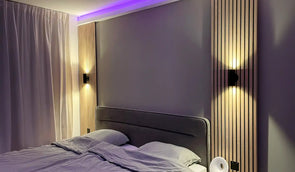
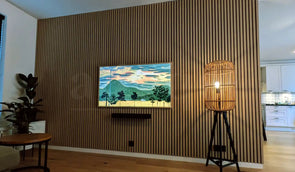
At a glance: Compare light, classic and dark walnut acoustic panels. Match the shade to your floor, furniture, daylight and the scale of your feature wall.
Table of contents
Walnut is a family of finishes
Walnut acoustic panels introduce brown tones and visible grain, but light, classic and dark walnut create different effects. Choose the finish in relation to the room, rather than treating walnut as one universal colour. Real wood variation and lighting also affect the final appearance.
Light walnut for a softer contrast
Light walnut suits interiors that need warmth without a strongly dark feature. Try it beside cream, warm white and pale upholstery. Compare it directly with your flooring: two similar wood colours can look mismatched if their undertones differ. A sample is more useful than judging two screen photographs.
Classic and dark walnut
Classic walnut offers a richer middle tone that works with warm neutral walls, black details and textured fabrics. Dark walnut creates a deeper backdrop behind a TV, bed or reception counter. Balance a dark wall with lighting and lighter surfaces, particularly in a small room or a space with limited daylight.
Match the scale to the room
A full wall has a stronger colour effect than a narrow strip. Consider a partial-height headboard, a TV backdrop or a defined wall behind a sofa before deciding to cover every surface. View samples at the height and location of the proposed wall, both during the day and under evening lighting.
Materials and practical planning
Adeqo walnut panels have real veneer on three sides over MDF slats and a recycled PET felt backing. Standard widths are 60 cm, with 260 and 300 cm lengths. The acoustic result depends on coverage and mounting. Finish exposed edges with matching trims and keep the veneer dry during cleaning. Browse the walnut collection and order samples before your full project order.
Plan your project with Adeqo
Compare acoustic wall panels, order finish samples or contact the team for advice. For commercial projects, apply for a business account.


| Feature | Light Walnut | Classic Walnut | Dark Walnut |
|---|---|---|---|
| Tone | Warm beige-brown | Medium warm brown | Deeper brown |
| Effect | Light and natural | Warm and versatile | Strong contrast |
| Pair with | Light wood and concrete | Light or dark wood | Light wood, concrete and stone |
| Style | Scandinavian, Japandi | Modern, classic | Industrial, hotel-inspired |
| Room ideas | Bedroom, hallway | Living room, dining area | TV backdrop, feature wall |


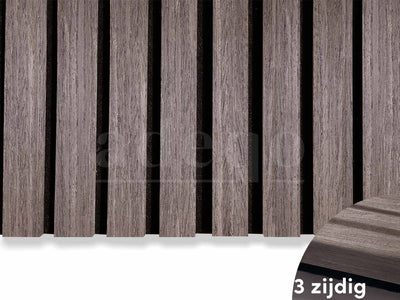

How does Dark Walnut compare with the other finishes?
Compare physical samples in the room where the panels will be installed. Lighter finishes give a brighter effect; smoked, brown and black finishes create stronger contrast. Light Walnut is lighter than Classic or Dark Walnut, while rustic oak has a more lively grain. Daylight, evening lighting and your flooring all affect the result. Natural veneer varies between pieces.
Can I use these panels behind a TV?
Yes, as a decorative acoustic wall finish. Anchor the TV bracket to the underlying wall or a suitable structural frame, not to the felt or slats. Plan cables, sockets, ventilation and exposed edges before fitting the panels.
How do I choose the right wood finish for my room?
Compare physical samples against your floor, furniture and wall colour in daylight and under evening lighting. Black gives a stronger contrast, walnut brings warm brown tones and lighter oak can keep the composition brighter. A smaller feature area may suit a dark finish where a full wall would dominate the room.
How do these panels improve room acoustics?
Sound reaches the porous felt through the gaps between the slats. The backing absorbs part of the reflected sound and helps reduce reverberation. Class A absorption and NRC 0.90 apply to the tested installation configuration; results in a room depend on coverage and mounting. Panels do not replace sound insulation against noise through walls.
How many panels do I need?
For a full-height wall, divide its width by the panel width and round up. Standard panels are 60 cm wide; a 3 m-wide wall needs five full-width panels if the selected length covers its height. Draw the cut layout and allow for waste. For acoustic treatment, coverage depends on the room and mounting; 30–40% of wall area is an initial guide, not a guaranteed result.