


At a glance: Build a wood slat TV wall in the right order. Plan structural TV fixings, cable access, lighting and panel edges before installation.
Table of contents
Decide how much of the wall to cover
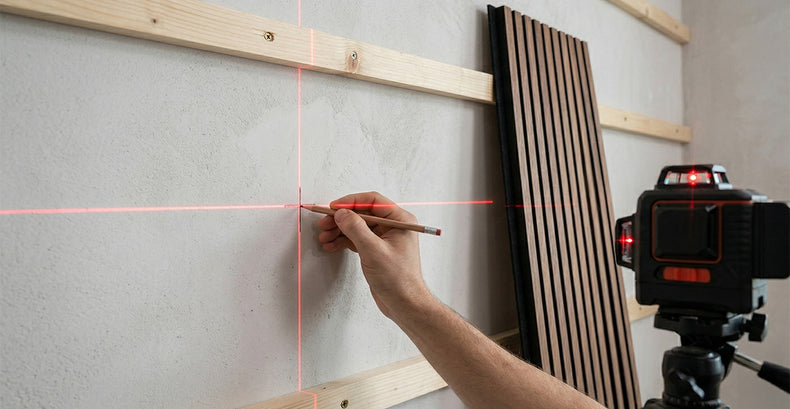
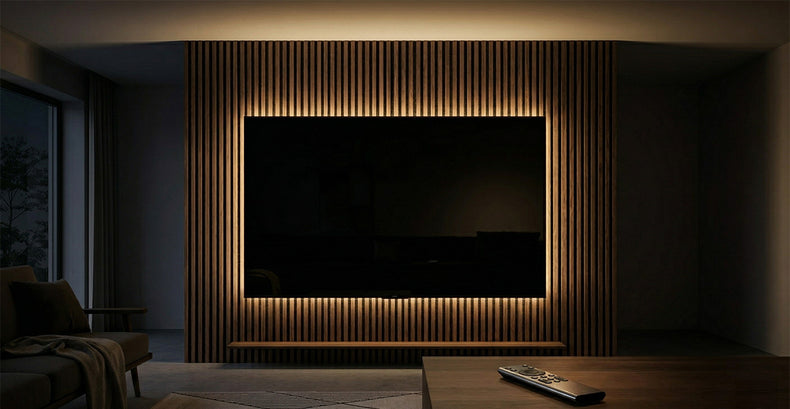
A wood slat TV wall can be a full-height feature, a central strip or a backdrop that continues behind a floating cabinet. A built-out media wall is a different construction from panels fixed directly to an existing wall. Choose the layout first, then mark the screen position, cabinet and surrounding clearances.
Fix the TV to the structure
The TV bracket must be anchored to a suitable wall or structural frame. Felt and decorative slats are not designed to support a television. Determine the bracket position before fitting panels, and use appropriate fixings and spacers for the substrate and panel thickness. Consult an installer if the wall construction or load is unclear.
Route cables before the panels go up
Plan mains power, signal cables and service access before closing the wall. A mounting frame can provide space behind the finish, but it should be designed for the intended installation. Keep sockets and cable connections accessible, and have electrical alterations carried out by a qualified professional. Do not trap equipment that needs ventilation behind a sealed decorative surface.
Fit panels and lighting in sequence
Check the slat rhythm against the centre of the television. Cut openings carefully, then install panels and matching end trims. If adding LED lighting, use a suitable profile and follow the lighting manufacturer’s instructions for heat, clearance and power supplies. Test the lighting before access is restricted.
Choose a finish that suits the screen
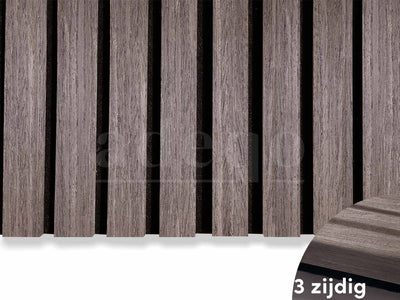
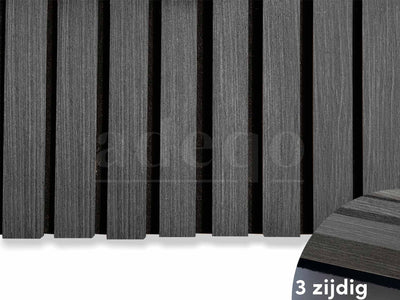
Black oak gives a strong backdrop; walnut adds warmth and light oak keeps the room brighter. Compare samples under the light in which you normally watch television. Acoustic panels help with reflected sound in the room, but they do not soundproof a home cinema. Ask Adeqo for help with dimensions and the installation accessories.
Plan your project with Adeqo
Compare acoustic wall panels, order finish samples or contact the team for advice. For commercial projects, apply for a business account.
| Situation | TV fixing | Fixing selection | Cable planning |
|---|---|---|---|
| Masonry or concrete wall | Anchor bracket to structural wall | Choose for substrate, load and build-up | Retain access to connections |
| Plasterboard wall | Use suitable structural backing or rated fixing system | Follow system and bracket requirements | Plan before panel installation |
| Panels glued directly to wall | Anchor bracket through to structural wall | Allow for panel thickness and substrate | Use accessible routes; qualified electrical work |

Can I mount a TV on acoustic panels?
The TV bracket must be fixed through to a suitable structural wall or supporting frame. The felt and decorative slats are not designed to carry a television. Plan the bracket and cable routes before installing panels, and use fixings appropriate to the substrate and load.
How can I hide cables behind a slat TV wall?
Plan cable routes and service access before installation. A designed mounting frame can provide space behind the panels. Keep sockets and connections accessible, allow ventilation for equipment, and have electrical alterations carried out by a qualified professional.
Which panel colour works best behind a TV?
Darker finishes such as Classic Walnut, Dark Walnut and Black Oak create a strong backdrop for the screen. Balance the panel area with the room's light, flooring and furniture. Compare samples under your normal TV-viewing lighting before choosing.


